AI-Enabled Biomimicry: Nature
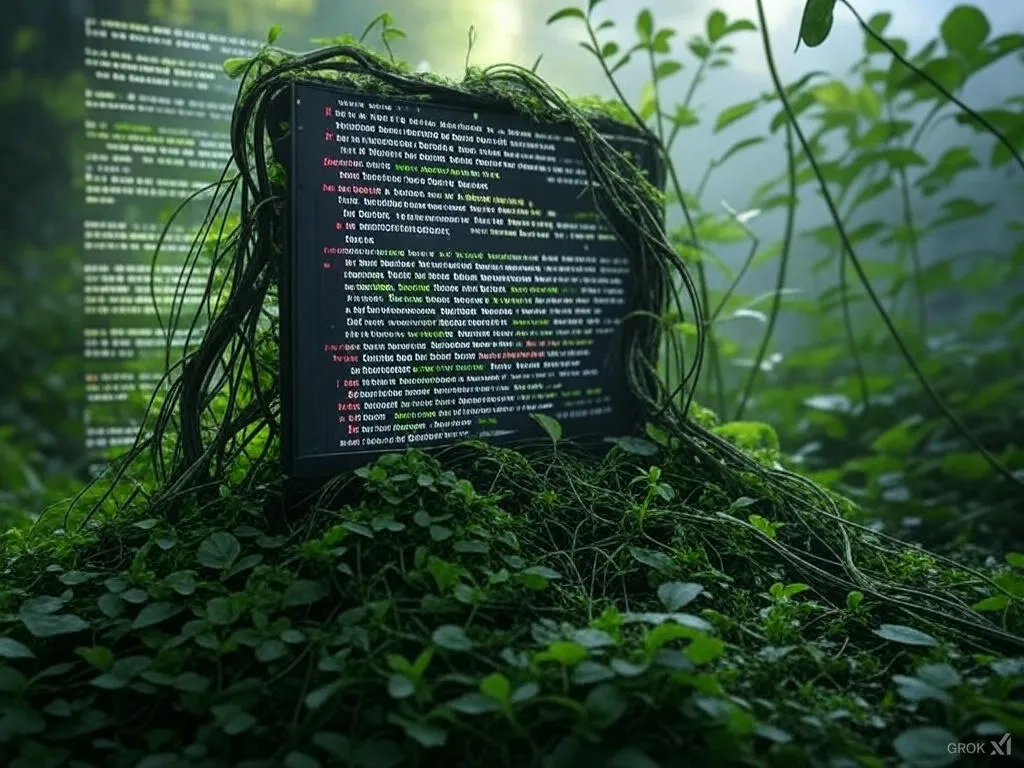
AI-Enabled Biomimicry: Nature's Blueprint for Next-Gen Software Design
The Hidden Connection
Picture this: A software system that self-heals like a living organism, adapts like a chameleon, and scales like a beehive. This isn't science fiction – it's the emerging field of AI-enabled biomimicry in software design, where artificial intelligence meets nature's time-tested strategies.
Nature's 3.8 Billion Years of R&D
While we've spent decades perfecting software architecture, nature has been running its own R&D lab for 3.8 billion years. Today, AI is helping us decode and implement these biological solutions in ways previously impossible:
- Self-Healing Systems: Just as your skin automatically repairs cuts, modern AI systems can detect and fix code vulnerabilities in real-time
- Adaptive Architectures: Like a plant growing towards sunlight, AI-powered systems can dynamically restructure themselves based on user demands
- Swarm Intelligence: Taking cues from ant colonies, distributed systems are becoming more resilient and efficient
Real-World Applications That Will Surprise You
The Forest Network Protocol
A team at ETH Zürich developed a network routing protocol inspired by how tree roots share resources. Their AI system analyzes network traffic patterns the way mycorrhizal networks (fungi networks connecting tree roots) distribute nutrients. Early tests show a 47% improvement in network efficiency compared to traditional protocols.
The Immune System Approach to Cybersecurity
Remember how your body fights off infections? A startup in Singapore is using AI to mimic human immune responses in cybersecurity. Their system:
- Creates digital "antibodies" for each new threat
- Maintains a "memory" of past attacks
- Adapts its defense strategies in real-time
The results? A 92% reduction in false positives and a 3x faster response to new threats compared to traditional security systems.
Why This Matters Now
As software systems become more complex, traditional design approaches are hitting their limits. Nature has already solved many of the challenges we're facing:
- Scalability: How do ant colonies manage millions of members efficiently?
- Resilience: What makes a spider web both strong and flexible?
- Energy Efficiency: How do desert plants maximize limited resources?
AI is finally giving us the tools to understand and implement these solutions in code.
The Future is Closer Than You Think
By 2026, Gartner predicts that 30% of new software architectures will incorporate biomimicry principles, up from less than 5% in 2023. This isn't just about making better software – it's about creating systems that are more natural, sustainable, and aligned with how our world actually works.
Practical Steps for Developers
Want to get started with AI-enabled biomimicry? Here are three concrete steps:
- Study Natural Patterns: Before diving into code, observe how natural systems solve similar problems
- Start Small: Begin with one biomimetic principle, like self-healing or adaptive scaling
- Leverage AI Tools: Use machine learning to identify patterns in natural systems that could apply to your software challenges
Looking Ahead: The Next Evolution
As AI continues to advance, we'll see even more sophisticated applications of biomimicry in software design. Imagine:
- Software that evolves like living organisms
- Systems that form symbiotic relationships automatically
- Architectures that adapt to environmental changes like a living ecosystem
Conclusion
Nature has been perfecting its designs for billions of years. With AI as our translator, we're finally able to apply these time-tested solutions to modern software challenges. The result? More resilient, efficient, and sustainable systems that work in harmony with natural principles.
The next time you face a complex software design challenge, ask yourself: "How would nature solve this?" The answer, with AI's help, might surprise you.