Building Resilient Supply Chains with AI Agents in Dynamic Inventory Management
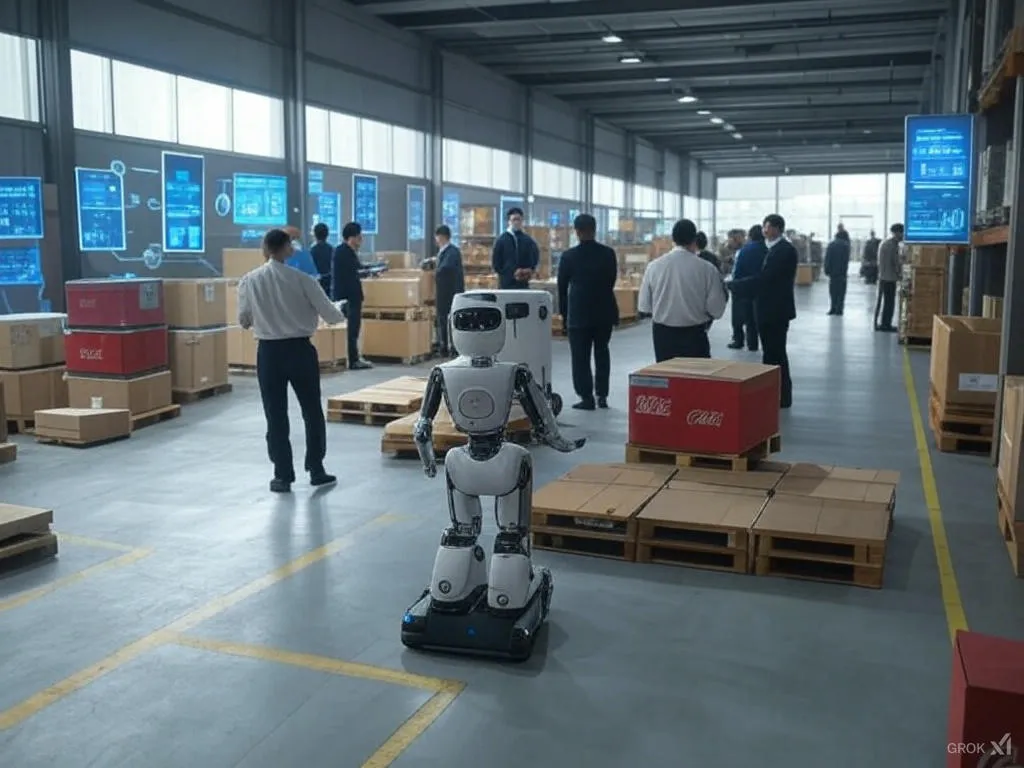
Comprehensive Analysis: Building Resilient Supply Chains with AI Agents in Dynamic Inventory Management
Key Points
- AI agents enhance inventory management by automating tasks and predicting demand in real-time.
- They help reduce costs and improve service levels, as shown by Coca-Cola and other companies.
- By 2025, 75% of supply chain organizations will use AI, a big jump from 10% in 2020, showing rapid growth.
Introduction
In today's fast-paced business environment, maintaining efficient inventory management is crucial for ensuring customer satisfaction and operational efficiency. Traditional inventory methods often struggle with the dynamic nature of modern supply chains, leading to issues like stockouts and overstocking. AI agents, autonomous systems leveraging machine learning, are transforming this landscape by providing real-time insights and automating decision-making processes.
Background and Research Process
The research began by identifying a novel topic within AI agents for business decision-making, focusing on their role in supply chain management. Initial web searches revealed trends like proactive problem-solving and agent orchestration, with Gartner predicting 15% autonomous decisions by 2028. Further research highlighted their use in inventory optimization and supply chain resilience, supported by case studies and industry statistics.
Definition and Role of AI Agents
AI agents are autonomous systems designed to perform tasks, make decisions, and interact with their environment without constant human intervention. In inventory management, they use machine learning to analyze data, predict trends, and automate processes like stock monitoring, demand forecasting, and order placement. This shift from traditional, manual methods to AI-driven systems marks a significant advancement in supply chain operations.
How AI Agents Enhance Decision-Making
AI agents improve inventory management decision-making in several ways:
- Automation of Routine Tasks: They handle repetitive tasks such as data entry and report generation, freeing human resources for strategic activities.
- Data-Driven Insights: By processing large datasets, they provide accurate demand forecasts and optimal stock levels, enhancing decision accuracy.
- Real-Time Actions: They monitor inventory levels and market trends in real-time, enabling immediate adjustments to prevent stockouts or overstocking.
- Error Reduction: They minimize human errors in stock counting and order fulfillment, improving reliability.
Real-World Examples and Case Studies
Several companies have successfully implemented AI agents for inventory management:
Coca-Cola's Success Story
Coca-Cola utilizes AI to manage stock levels in its 16 million retail coolers worldwide, predicting demand and automating reordering. This has increased efficiency and reduced manual labor, ensuring product availability.
Other Industry Leaders
- Retail Giant: Implemented an AI system for demand forecasting and stock optimization, reducing out-of-stock events by 20% and inventory holding costs by 15% within the first year.
- Pharmaceutical Company: Used AI agents across multiple warehouses, improving forecast accuracy by 30%, leading to a 25% reduction in stockouts and a 10% decrease in excess inventory.
Current Trends and Future Predictions
The adoption of AI in supply chain management is accelerating:
- By 2025, 75% of supply chain organizations will use AI in at least one function, up from less than 10% in 2020 (Gartner).
- AI is expected to enhance supply chain visibility by 41% and reduce disruptions by 40% (WiFiTalents).
- The market is projected to reach $157.6 billion by 2033 (Statista).
Challenges and Considerations
Despite the benefits, implementing AI agents in inventory management faces challenges:
- Data Quality: AI models require high-quality, accurate data for reliable predictions.
- Integration: Integrating AI with existing systems can be complex, requiring significant IT investment.
- Human Oversight: While AI automates many tasks, human oversight remains necessary for handling exceptions and strategic decisions.
Future Outlook and Trends
Looking ahead, AI agents in inventory management are poised for further evolution:
- Sophistication: Advances in AI will enable agents to handle more complex tasks.
- Technology Integration: AI is expected to integrate with technologies like blockchain for enhanced transparency.
- Sustainability Focus: AI will optimize inventory to reduce waste and support environmental goals.
Conclusion
AI agents are revolutionizing inventory management, enabling businesses to build resilient supply chains that adapt to market dynamics. Through automation, real-time insights, and predictive analytics, they reduce costs, improve service levels, and enhance customer satisfaction. The projected 75% adoption rate by 2025 underscores their growing importance in shaping the future of supply chain management.