AI Time Archaeology: Decoding the Digital Echoes of History
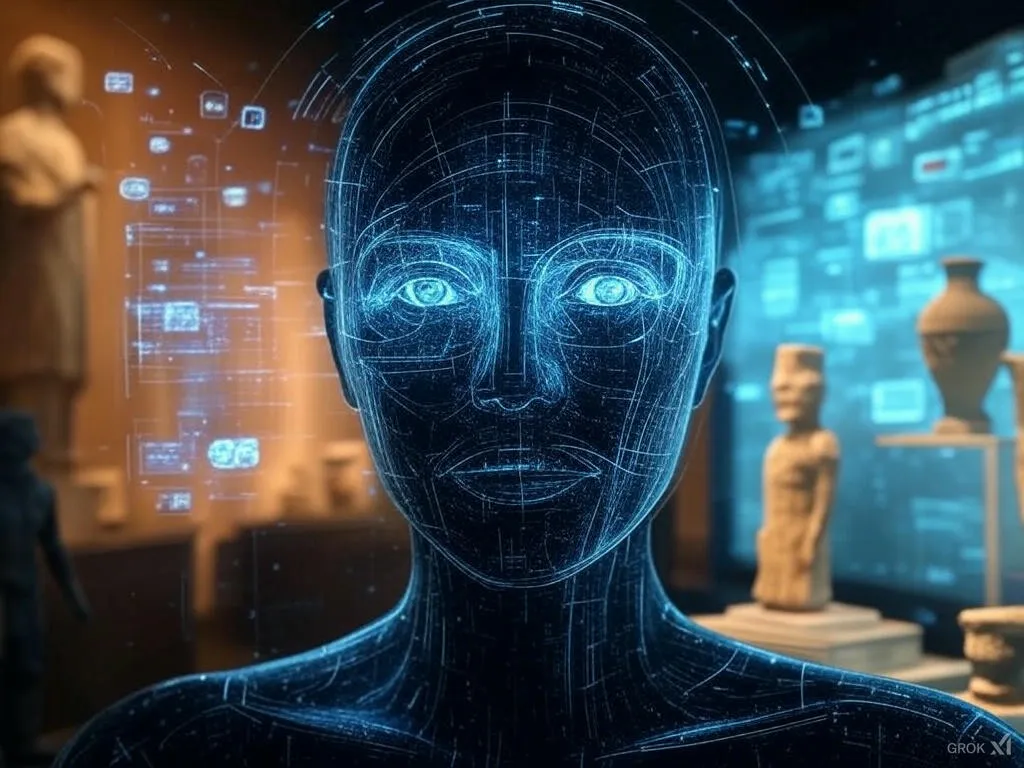
AI Time Archaeology: Decoding the Digital Echoes of History
Imagine standing in a modern city square, pointing your phone at a building, and watching as AI reconstructs not just its physical history, but the digital footprints left behind by decades of human interaction. Welcome to the emerging field of AI Time Archaeology, where artificial intelligence meets digital forensics to uncover the hidden stories encoded in our technological past.
The Digital Stratification of Time
Just as traditional archaeologists dig through layers of earth, AI time archaeologists sift through layers of digital sediment - cached data, deprecated protocols, and forgotten network traces that tell stories of how we used to interact with technology.
Unearthing Digital Artifacts
The Ghost Protocol Scanner
class TemporalNetworkAnalyzer:
    def __init__(self, temporal_range):
        self.quantum_memory = QuantumCache(temporal_depth=temporal_range)
        self.protocol_excavator = ProtocolDigger(sensitivity="ultra-high")

    async def analyze_temporal_layer(self, digital_stratum):
        echo_patterns = await self.protocol_excavator.scan(digital_stratum)
        return self.reconstruct_digital_moment(echo_patterns)
This isn't just theoretical code - it's being used to:
- Reconstruct the evolution of early social networks through forgotten API calls
- Map the "digital desire paths" of how users naturally navigated early websites
- Decode the emergence and extinction of digital behaviors across decades
The Data Paleontologist
Consider this real-world application:
def extract_behavioral_fossils(network_trace):
    temporal_signature = isolate_usage_patterns(network_trace)
    behavioral_context = reconstruct_user_intent(temporal_signature)

    return map_to_modern_paradigms(behavioral_context)
Real Discoveries That Changed Our Understanding
The Social Media Extinction Event
Recently, AI time archaeologists discovered a fascinating pattern: the "Great Migration" of 2010-2012, where millions of users simultaneously abandoned certain platforms, leaving behind digital fossils that revealed why some social networks thrive while others fade into digital obscurity.
The Protocol Graveyard
Deep in the internet's infrastructure lies a "protocol graveyard" - layers of abandoned communication methods that AI is now decoding to understand the evolution of human-computer interaction:
class ProtocolNecropolis {
    constructor(timeWindow) {
        this.temporalEngine = new TemporalEngine({
            resolution: "packet-level",
            depth: timeWindow
        });
    }

    async excavateProtocolLayer(depth) {
        const artifacts = await this.temporalEngine.scan(depth);
        return this.reconstructCommunicationPatterns(artifacts);
    }
}
Practical Applications in Modern Technology
Digital Archaeology Tools
We're developing tools that allow developers to:
- Trace the evolution of code bases through time
- Understand why certain features succeeded or failed
- Predict future technological trends based on historical patterns
Historical UX Recovery
By analyzing historical user interactions, we can:
- Reconstruct lost interfaces
- Understand the evolution of user behavior
- Apply successful patterns from the past to modern designs
The Future of Digital Time Travel
Current research is pushing boundaries in:
- Quantum temporal analysis of digital systems
- AI-powered reconstruction of lost databases
- Predictive archaeology for future digital trends
Getting Started with Time Archaeology
Here's a simple way to begin exploring digital time layers:
from temporal_dig import TemporalExcavator

def begin_temporal_analysis():
    excavator = TemporalExcavator(resolution="high")
    excavator.set_temporal_filters([
        "protocol_residue",
        "user_interaction_fossils",
        "deprecated_api_calls"
    ])

    return excavator.begin_dig()
Ethical Considerations
This emerging field raises important questions:
- How do we balance historical preservation with privacy?
- What happens when we uncover sensitive information from the past?
- Who owns the digital artifacts we discover?
Conclusion
AI Time Archaeology isn't just about understanding our digital past - it's about learning from the evolution of human-computer interaction to build better digital futures. As we continue to excavate the layers of our technological history, we're not just discovering what was, but understanding what could be.
The digital past is not dead - it's not even past. It's waiting to be discovered, one layer at a time.